
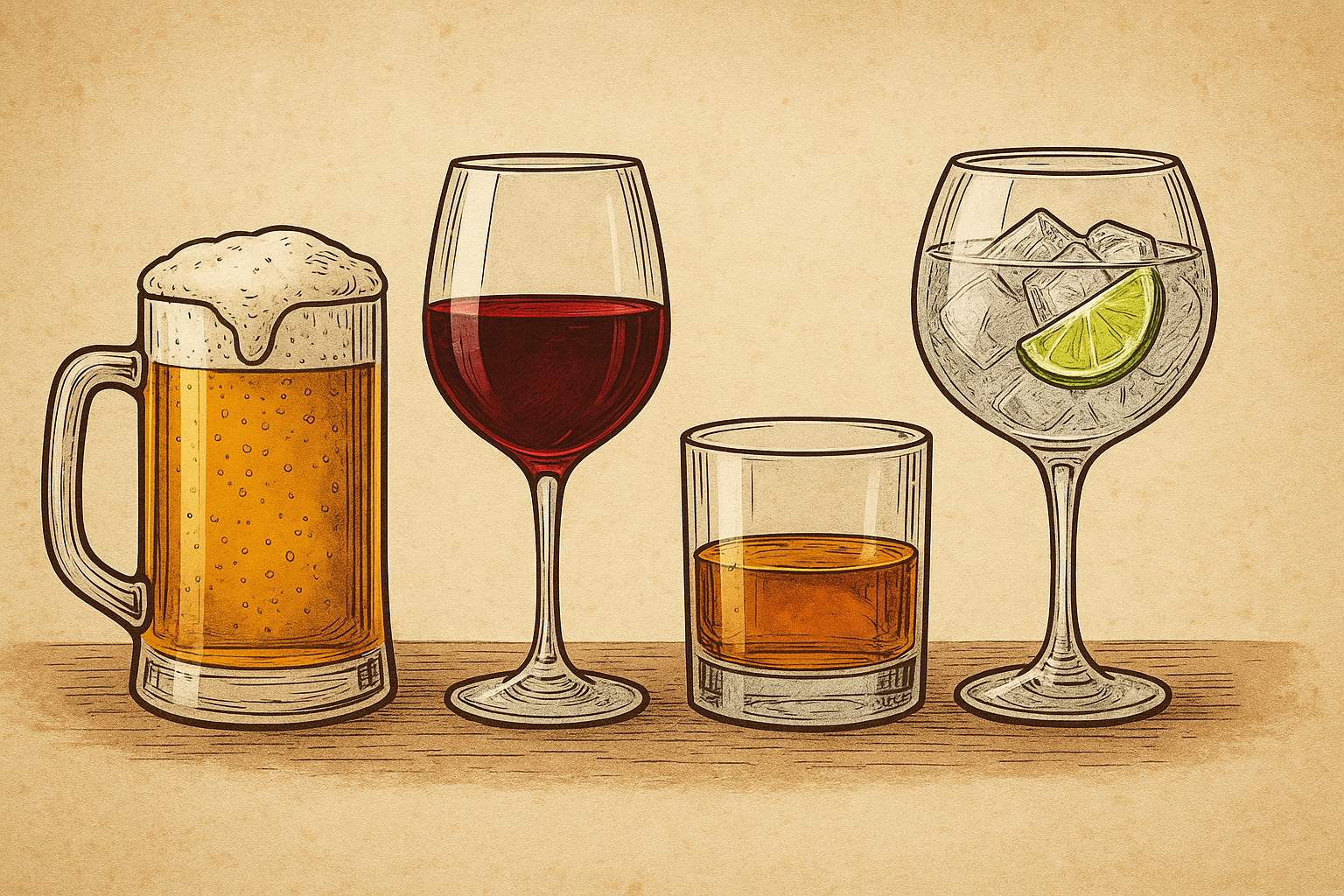
Alcoholic beverages have been cherished across cultures for thousands of years, serving roles that go far beyond simple consumption. They have acted as symbols of celebration, tools of social bonding, elements of religious practice, and reflections of cultural identity. Today, despite countless modern variations, the world’s most beloved alcoholic drinks remain deeply rooted in history. Their continued popularity can be traced to their fascinating origins, evolving craftsmanship, and the global traditions that keep them relevant across generations. This deep dive explores how these iconic beverages came to be and why they remain central in drinking culture around the world.
The Ancient Origins of Wine
No alcoholic drink has a lineage as rich as wine. Traces of early winemaking date back more than 8,000 years to ancient Georgia, where early civilizations fermented grapes and stored the resulting beverage in clay vessels. Wine quickly spread to Mesopotamia, Egypt, Greece, and Rome, each adding its own influence. For example, the Greeks refined wine culture with symposiums—social gatherings centered on philosophy and drink—while the Romans advanced large-scale viticulture across Europe.
Today, wine endures not only for its flavor diversity but also for its cultural symbolism. It represents sophistication, celebration, and heritage. Whether it’s a robust Cabernet Sauvignon, a sparkling Prosecco, or a delicate Rosé, wine’s long journey through history continues to captivate people worldwide.
Beer: Humanity’s Everyday Companion
Beer is arguably the world’s most accessible alcoholic drink, enjoyed everywhere from small villages to massive stadiums. Its history goes back roughly 7,000 years to ancient China and Mesopotamia, where early beers were thick, bread-like brews consumed with meals. Egyptians perfected the brewing process, making beer a staple for workers building temples and pyramids.
Fast-forward to medieval Europe, where monasteries played a crucial role in refining brewing techniques. Monks introduced hops, which added bitterness and acted as a natural preservative, shaping the beer we know today.
In modern times, beer has achieved global dominance thanks to its refreshing character, affordability, and endless variety—from lagers and ales to stouts, saisons, and massively popular IPAs. The craft beer revolution has only deepened appreciation for beer’s complexity and creativity.
Whiskey: A Spirit of Craftsmanship and Heritage
The origins of whiskey (or “whisky” in Scotland and Japan) can be traced to medieval monks who distilled beer-like mixtures into stronger spirits. Scotland and Ireland are considered the birthplaces of whiskey, though the drink evolved significantly as it traveled.
American whiskey—especially bourbon—developed its own identity with corn-based mash bills and charred oak barrel aging, while Japan emerged as a major producer renowned for precision and purity.
Whiskey’s modern popularity stems from its depth of flavor, diversity of styles, and the artistry behind each bottle. Aging, barrel selection, and distillation methods create endless variations, making whiskey a favorite among collectors and connoisseurs.
Vodka: The Spirit of Simplicity and Versatility
Originating in Russia and Poland, vodka was first used for medicinal purposes before becoming a cultural staple in Eastern Europe. Its defining feature—neutral flavor—made it the ideal spirit for mixing.
As vodka spread globally, it became the backbone of countless cocktails: the Martini, Moscow Mule, Bloody Mary, Cosmopolitan, and more. Its clean profile and smoothness have helped vodka maintain widespread appeal, especially among younger generations seeking approachable yet potent drinks.
Rum: From the Caribbean to the World
Born in the Caribbean during the 17th century, rum emerged from the sugarcane industry. Enslaved workers discovered that molasses could be fermented and distilled into a strong spirit. Over time, rum became linked with sailors, pirates, and colonial trade routes.
Today, rum’s image has shifted dramatically. It’s enjoyed in both refined aged varieties and lively tropical cocktails like the Mojito, Daiquiri, and Piña Colada. Its versatility and sweet undertones make it a beloved global favorite.
Sake: Japan’s Iconic Rice Brew
Sake, often called Japanese rice wine, has been crafted for over 2,000 years. Historically used in ceremonies and imperial rituals, sake gradually became woven into everyday Japanese life.
Its brewing process—more similar to beer than wine—produces a unique, delicate flavor profile. As Japanese cuisine gained international popularity, so did sake, which is now enjoyed in restaurants and bars around the world.
Why These Drinks Remain Popular
Despite the explosion of modern beverages, the world’s classic alcoholic drinks maintain their dominance due to:
-
Cultural heritage that enriches each sip with meaning.
-
Flavor complexity, perfected over centuries.
-
Versatility, especially in cocktails and food pairings.
-
Global availability, supported by strong production networks.
-
Emotional connection, tied to traditions, celebrations, and shared experiences.
A Timeless Legacy
The world’s most beloved alcoholic drinks are more than simple beverages—they are living pieces of history. Their stories reflect human innovation, cultural identity, and the universal desire to connect with others. As long as people cherish tradition, craftsmanship, and shared moments, these iconic drinks will continue to shape drinking culture for generations to come.